
Download StableDiffusion Vercel – AI‑Powered Image Generation Tool
Overview
StableDiffusion.vercel is a cloud‑hosted, AI‑driven image generation platform that transforms natural‑language prompts into high‑resolution visuals within seconds. Built on the modern Next.js framework and powered by the Banana Logo inference engine, the service runs entirely in the browser, meaning users never need to install heavyweight machine‑learning libraries or own a dedicated GPU. Whether you are a graphic designer seeking rapid concept sketches, a developer looking to embed dynamic graphics into a web app, or an educator needing visual aids for lessons, StableDiffusion.vercel offers a seamless, secure, and up‑to‑date solution.
The platform is accessible from any device with an internet connection—Windows, macOS, Linux, Android, or iOS—thanks to its responsive web UI. A generous free tier provides a taste of the technology, while a paid full‑version license unlocks unlimited generations, priority processing, and full access to the open‑source code hosted on GitHub. In short, this tool combines cutting‑edge diffusion models with the convenience of a zero‑install, browser‑based interface, making AI‑generated imagery practical for both casual creators and professional teams.
Key Features, Installation & Compatibility
- Text‑to‑Image Generation: Turn descriptive sentences into detailed images in under 15 seconds.
- Next.js Architecture: Server‑side rendering ensures fast response times and SEO‑friendly URLs.
- Banana Logo Backend: Scalable inference engine delivers consistent quality across all requests.
- Open‑Source Repository: Full source code on GitHub enables deep customization and self‑hosting.
- Cross‑Platform Browser Access: Works on any modern browser, supporting Windows, macOS, Linux, Android, and iOS.
- Secure Cloud Processing: All data travels over HTTPS and is processed in isolated containers.
- Automatic Updates: Model and UI are continuously refreshed with the latest AI research.
- RESTful API: Developers can embed generation capabilities via simple HTTP calls.
- Creative Controls: Adjustable style, resolution, and iteration parameters for fine‑tuned output.
- Free Tier & Paid License: Start for free; upgrade for unlimited usage and source‑code rights.
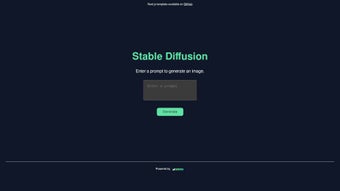
Getting started is intentionally simple. First, visit the official website and create a free account using an email address. After confirming the email, you are taken to a dashboard where a text box awaits your prompt.
Enter a clear, descriptive phrase—e.g., “a misty forest at dawn, hyper‑realistic, soft lighting”—and adjust optional sliders for style weight, resolution (up to 1024 × 1024 on the free plan), and sampling steps. Click “Generate,” and the backend queues the request, runs the diffusion model, and streams the resulting image back to your browser within seconds. You can then download the PNG, share a direct link, or save the image to your account gallery.
Because all heavy computation occurs on Vercel’s servers, the client‑side requirements are minimal. A recent version of Chrome, Edge, Firefox, or Safari with JavaScript enabled is sufficient. The platform performs well on desktop operating systems such as Windows 10/11, macOS 10.15+, and popular Linux distributions, as well as on mobile devices running Android 9+ (Chrome) or iOS 13+ (Safari).
For users who prefer to host the engine themselves, the GitHub repository includes a Dockerfile and detailed README. Self‑hosting demands Node.js v14+, npm, and optionally a GPU with at least 8 GB VRAM (e.g., NVIDIA RTX 2070) to match cloud‑level performance. The Docker image bundles all dependencies, allowing a single‑command deployment to any Linux server or cloud VM.
Pros, Cons & Frequently Asked Questions
Pros
- Instant, cloud‑based generation eliminates the need for local GPUs.
- High‑quality images from simple text prompts.
- Generous free tier for casual experimentation.
- Open‑source code offers full transparency and customizability.
- Responsive design works across desktop and mobile browsers.
- Secure, encrypted processing protects user data.
- Well‑documented REST API for easy integration.
- Regular updates keep the model state‑of‑the‑art.
Cons
- Free tier limits (20 generations per day) may be restrictive for power users.
- Generation speed depends on internet latency and server load.
- Self‑hosting requires technical expertise and compatible hardware.
- Advanced style controls have a learning curve for beginners.
- Maximum resolution on the free plan is capped at 1024 × 1024.
Frequently Asked Questions
Is there a completely free version of StableDiffusion.vercel?
Yes. The free tier provides up to 20 image generations per day and includes access to the core web UI and API with standard resolution limits.
Can I use StableDiffusion.vercel without an internet connection?
The hosted service requires an active internet connection because all inference runs on Vercel’s cloud servers. However, you can clone the GitHub repository and run a self‑hosted instance locally if you have the necessary hardware.
What type of prompts generate the best results?
Clear, detailed prompts that include style references, lighting, and composition details tend to produce the most accurate images. For example, “a cyberpunk street market at night, neon signs, cinematic depth of field” works better than a vague phrase like “cool city.”
Is my data stored after I generate an image?
Prompts and generated images are processed in isolated containers and are not retained beyond the session unless you explicitly save them to your account gallery.
How do I integrate the API into my own application?
After obtaining an API key from the dashboard, send a POST request to https://api.stablediffusion.vercel.ai/v1/generate with a JSON body containing prompt, width, height, and optional style parameters. The response returns a base64‑encoded PNG that you can render directly or save.
Conclusion & Call to Action
StableDiffusion.vercel successfully bridges the gap between cutting‑edge diffusion models and everyday usability. Its cloud‑first architecture removes the barrier of expensive hardware, while the open‑source license empowers developers to adapt the engine for niche workflows. The platform’s free tier lets newcomers experiment without commitment, and the paid license provides unlimited generations, priority processing, and full source‑code access for teams that need scale.
Whether you are crafting marketing visuals, prototyping UI concepts, or teaching AI fundamentals, this tool offers a secure, up‑to‑date, and highly flexible solution. Start by signing up for the free tier today, explore the intuitive prompt editor, and see how quickly your ideas transform into vivid images. When you’re ready to unlock the full suite of features—including higher resolution limits, custom model fine‑tuning, and direct repository access—simply upgrade through the dashboard.
Download StableDiffusion.vercel now and let AI bring your imagination to life.
Pros: Cloud‑based speed, generous free tier, open‑source flexibility, cross‑platform support, robust API.
Cons: Free‑tier limits, occasional latency, self‑hosting complexity.



.png)